

By: Keiichiro Kojima, Rena Inobe, and Genos Moretto
Facing the vast Pacific Ocean, Sukumo Bay and Sukumo Fishing Port have supported the lives of local people. Fish such as silver-stripe round herring, horse mackerel, and sardines have deeply originated in daily life and local commerce. The horizon seen from Sukumo Bay blends beautifully with the setting sun, earning the name “Daruma Sunset” and drawing visitors with its calm atmosphere. In this town, where the shaking of mountain leaves and the quiet rhythm of the waves surround you, even travelers feel their hearts softly, as if the noise of daily life fades away.
But under the surface of this peaceful sea, small change has been exactly accumulating. Marine plastics and drifting debris are harming the waters, and fish that once filled the bay are slowly disappearing. Behind a land of nature that unchanged, only the sea has been quietly transforming.
At 5:30 a.m., in the faint light of dawn, Mr. Nagaoka steps into the Sukumo Bay Fisheries Cooperative as he does every morning. The cold sea breeze cuts through the early harbor, carrying a familiar mix of salt and sweat. Fishermen arrive one after another, silently unloading crates that feel lighter than they once did. While greeting them with small talk and a gentle smile, Mr. Nagaoka pauses in front of a crate filled only halfway with fish.
“Every year, it gets less and less,” he whispered. His words contain both the sorrow and the resolve of someone who has lived his life alongside the sea. This morning’s routine, for Mr. Nagaoka, is one of the warmest moments of his day, but at the same time, a reminder of the harsh reality of the changing waters.
The sunset that sinks into the calm sea remains beautiful; and the round sun is melting into the horizon like a daruma doll. But beneath that glow, the sea continues to change. The waters that have supported the lives of the people here now seem to be quietly calling for help.

Sukumo City, a coastal powerhouse responsible for over 50% of Kochi Prefecture’s entire fisheries production, is facing a critical decline in fish populations caused by overfishing, rising sea surface temperatures, and environmental degradation. This downturn threatens the livelihoods of nearly 400 local fishery workers and their families who form the economic backbone of the community.
The situation is increasingly critical as the effects of climate change and shifting oceanic conditions have accelerated in recent years, intensifying the ecological imbalance. The decline in daily catches and the rise in operational costs have deepened the economic and social strain on these local families, for whom the sea is not just a resource, but their primary source of income. The morning scene at the cooperative echoes a larger ecological change, carrying real and lasting consequences for a city where the local economy is inseparably tied to the health of the bay.
For decades, Sukumo Bay in Kochi Prefecture sustained both livelihoods and identity. Once described by Shinbo in 2008 as “the most intensively used fishing ground in Japan,” the bay’s rich coral and seagrass ecosystems once made coastal fishing reliable and routine. However, that reliability has eroded over the past twenty years as fish stocks declined under the combined pressure of climate change, reef degradation, overfishing, and invasive species.
Recent reports highlight the severity of these “sea issues.” Since 2024, sea temperatures around the Shikoku area have risen above 30°C. According to TBS NEWS DIG, these warm conditions weaken farmed fish like tuna and yellowtail, which cannot survive such high temperatures. Furthermore, Kochi Prefecture’s data shows that red tides have appeared almost every year since 2009, damaging local fisheries and aquaculture.
The Sukumo Bay Environmental Council notes that seaweed beds have been declining for over 30 years, worsened by sea urchins overgrazing the remaining vegetation, while coral reefs suffer from crown‑of‑thorns starfish and coral‑eating snails. Even the Kuroshio Current, while essential to the region, now brings a modern burden. Kochi University report explains that the current carries marine debris including plastic containers and fishing gear from China and the Korean Peninsula, which increases the burden of beach clean‑ups and waste management. Because these problems affect fisheries, aquaculture, and tourism at the same time, cooperation among the local government, researchers, and fishers is becoming more important to restore the marine environment and use it in a sustainable way.
Scientific studies link these declines in fish populations in Sukumo Bay to how the Kuroshio Current flows along the Pacific coast of southwest Japan. During large‑meander periods, the Kuroshio’s path and strength change, altering sea‑surface height and subsurface temperature at south of Sukumo. Studies using catch‑per‑unit‑effort (CPUE) data for 2006–2018 have shown that winter fish resources off Sukumo Bay are statistically linked to subsurface temperature and sea‑surface height anomalies associated with Kuroshio variability, including offshore meanders and westward‑propagating Rossby waves.
When the Kuroshio and its warm subsurface water stay farther offshore, suitable winter habitat for key small pelagic species such as sardines and horse mackerel shifts away from the bay, resulting in lower local catches. Over time, repeated years with unfavorable Kuroshio conditions, combined with existing pressures such as overfishing of demersal species and aging fishing communities, contribute to an overall decline in the apparent fish population in Sukumo Bay.
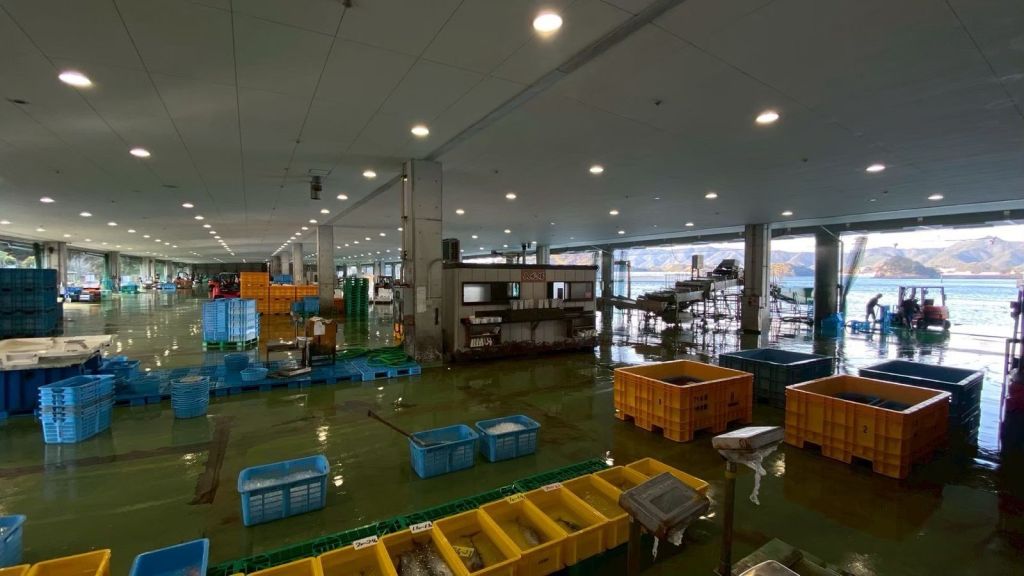
At the Sukumo Bay Fisheries Cooperative, the faces in the room explain the scale of the problem as clearly as the numbers on the catch reports. Kenji Nagaoka, who works at the cooperative, explains the issues they are facing through the numbers.
“Before, fishermen caught 14,000,000kg per year, but in recent years, the number has been under 10,000,000kg,” he says. “The biggest problem is that the reason is still unclear. That’s why it is so difficult to solve.”
At 5:30 a.m., the sea next to the market is crowded with many fishing boats. The fishermen usually depart in the evening and return to the market early in the morning with catches of sardine, horse mackerel, and the local specialty, silver-stripe round herring. After coming back, they divide their catch to sold, and the mood is often heavy.
“It’s not an easy life,” said Mr. Kimura, a fisherman in Sukumo. The reason he the decreasing fish catch. Fishermen salary depends on the amount of fish they get directly. A poor catch means a low salary. In addition, they must work long hours and are greatly affected by the weather and sea conditions. This creates strong financial insecurity for them and their families.
“Many young people give up living as a fisherman,” Mr.Kimura says with a sad face. It wll cause a labor shortage in the future.
Therefore, the problem of decreasing fish catches is a very serious issue that affects not only their work but also their way of life and the future of the local community.
The economic ripples extend to fish markets, processors, shops, and schools with shrinking enrollments, quieting community events tied to the fishing calendar. To understand how the next generation views this crisis, a survey was conducted among 151 high school students in Sukumo City, to assess their awareness of marine environmental issues, and their attitudes toward environmental conservation.
The survey showed that many students had visited Sukumo Bay, indicating that the local sea is familiar and integrated into their daily lives. However, fewer students said they were aware of marine environmental issues in Sukumo Bay, suggesting that familiarity with the sea does not always lead to a deeper understanding of environmental problems. As for their own environmentally conscious behaviors, most students rated themselves as “moderate”, and those who recognized the issues in the bay or have personally visited tend to show stronger motivation toward sustainable actions. This shows that direct contact with the region and awareness of its current conditions can accelerate the behavior of protecting the environment.
In the free writing responses, many students proposed simple actions such as “picking up trash” and “avoiding littering”, while others seeked for the local community to tackle something, like “making cleanup activities events”. Additionally, many comments requested institutional support, including “stronger governmental measures”, “increasing the number of trash boxes”, and “establishing awareness posters”.
Overall, while students feel a sense of closeness to their local sea, many of them still lack sufficient knowledge about marine environmental issues. However, the survey indicates that gaining knowledge and having direct experiences with the local environment can increase their willingness to engage in environmentally responsible actions.
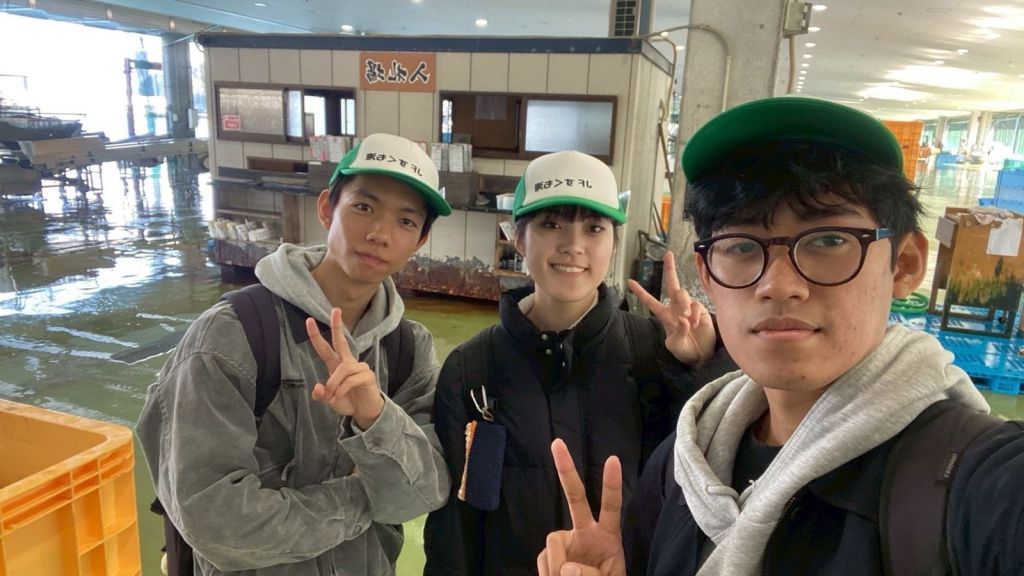
While the challenges are outstanding, adaptation is beginning to stir. Fishermen are testing gear for warming-resilient species and joining scientists in monitoring the bay. This shows a community learning to navigate a changing world, even as each dawn reminds them of the urgency of their task. Cooperation among the local government, researchers, and fishers is no longer just an option; it is the only way to restore the marine environment and ensure Sukumo remains a source of life for generations to come.
In Sukumo, where tides once dictated abundance, filling auctions, sustaining families, and binding generations to the sea. Nagaoka’s optimism stands as both anchor and challenge. Nearby, the cooperative buzzes faintly with adaptation: trials of warming-resistant gear, data-sharing with scientists, and whispers of tourism or direct sales to stretch each catch further. Yet, as sunlight stretches shadows across the docks, the morning energy dissolves into the quiet lap of water against the pier. Nagaoka watches the last boat kill its engine and drift toward the wall; the crew disembarks in silence, walking past a stack of blue plastic crates that sit stacked high, clean, and empty.
 Life in Kochi
Such a good article. I’ve never been to Sukumo, but now I really wanna go see the bay. I hope the sea and the community stay strong despite everything they’re facing.
LikeLike
It’s actually heartbreaking to hear the state of the marine that affects them, especially fishermen. I’d love to go to Sukumo sometime!
LikeLike
Being a fisherman isn’t an easy task, I’m very grateful for them that has risk their lives in the oceans to catch many delicious fish. With the changing environment, I hope Sukumo Bay and their fisherman could recover and catches more fish. Let’s all help by taking our own trash back and not dump it in the ocean! By the way, I really loves how the story is told in this article. People need to come and visit Kochi ASAP!
LikeLike
This article brings me Sukumo bay. I can imagine the serious sad situation and beautiful scenery at Sukumo bay…
Especially I was impressed this comment; “The biggest problem is that the reason is still unclear. That’s why it is so difficult to solve.” from Kenji Nagaoka.
LikeLike
After reading this, I really want to visit Sukumo and see the bay. This article made me appreciate our fishermen so much more. It’s tough to hear about the declining catches, but I truly wish for the community to come back stronger than ever.
LikeLike
Reading this article makes me realize how fisherman is really important to Kochi. It not simply a labor work but a work that could affect local community. It opens my eyes that Kochi is not just about hills or mountains, it a place people make a living by going to the sea. Overall, I enjoy your article!
LikeLike
I realized that I knew very little about Sukumo. With the number of fishing ports in Kochi steadily declining, this made me reflect on the issue again.
LikeLike
I’m so surprised that more than half of Kochi Prefecture’s fisheries in overall. There’re some issues in Sukumo Bay and numerous people studying about Sukumo Bay. Declining of amount of fishes’ been warned so long ago not only Kochi, but also whole of region. It’s so hard to balance demanding and supplying
LikeLike
I didn’t know that the ocean’s situation is changing. I learn many things about Sukumo from this article. Thank you.
LikeLike
I understand global environmental issues also affect local lives.
I was born in a port town like Susaki city, so these problems are serious for me too. Thank you for your nice article.
LikeLike
My hometown was once a thriving fishing community, but in recent years, that vitality has been fading… I felt measures were needed to preserve the fishing profession.
LikeLike