
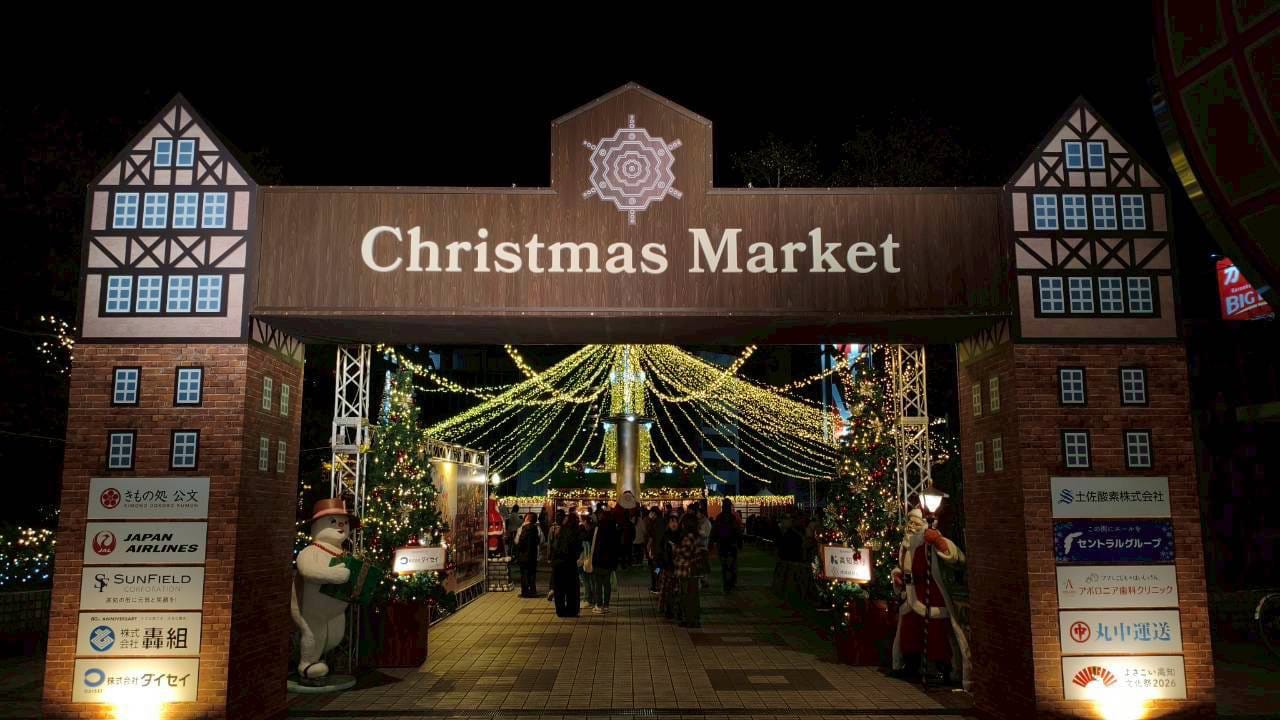
By early charlie, lovely chuky, funky turkey
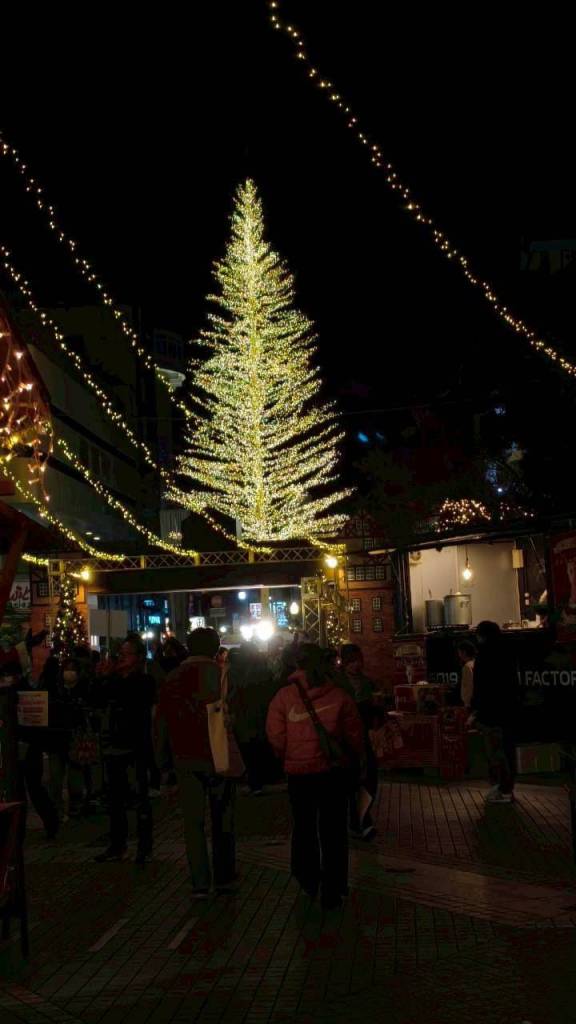
A huge tower dressed bright yellow lights with blue snowflakes radiates a thousand tiny light lines. The light asserts itself by spreading out freely like a star on a deep black sky. Under the tower, there is a family of three.
“Stars! Stars! Mama, help me,” a young girl shouted. “I want to grab the stars!” Her hand reaching out while being carried by her mother.
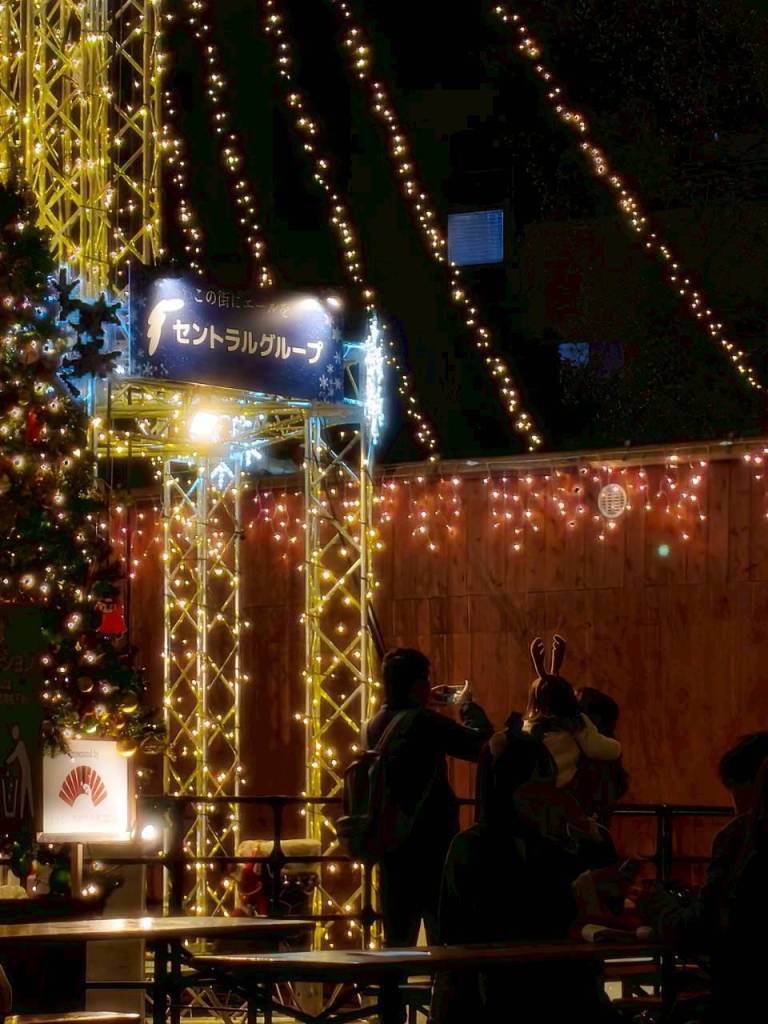
Next to them, father takes out a camera from his pocket. He raises his camera toward his family as they gaze at the illuminations, pressing the shutter again and again.
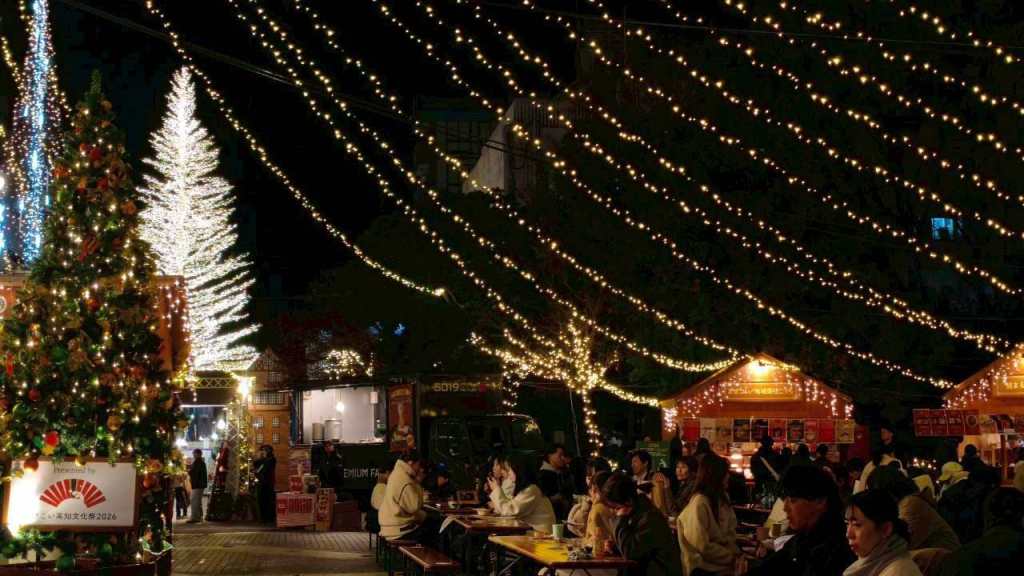
The aroma of freshly roasted turkey wafted through the air, blending with the aroma of freshly fried churros, accompanying the crowds sipping beer from plastic cups. Despite the chill and the crowds wearing winter jackets.
Their voices blended into a lively, calming atmosphere. Especially when a man with his acoustic guitar played a Christmas song on the main stage, the beautiful tones resonated throughout the venue, bringing cheer to the chilly night.
About seven kilometers from the city center, far from the thumping music and the glittering night lights, lies a quiet area on the edge of the city.
“I’m home.” Yuki, 54, who is a woman from Kochi Prefecture, visited a Christmas market as a customer with her family a few years ago, had just finished her work and arrived home.
A girl with red cheeks wearing a high school uniform who had just come home from school, ran towards her
“Mama, do you want to go to the Christmas market together?” asked 17-year-old Koharu.
“No, I don’t want to go there. It’s too expensive,” she answered without hesitation.
Yuki’s answer may sound simple, but it reflects a huge challenge Kochi is facing. Many residents are not avoiding the Christmas market because they dislike it. In fact Christmas in Japan has always been an event that is celebrated by the Japanese every year.
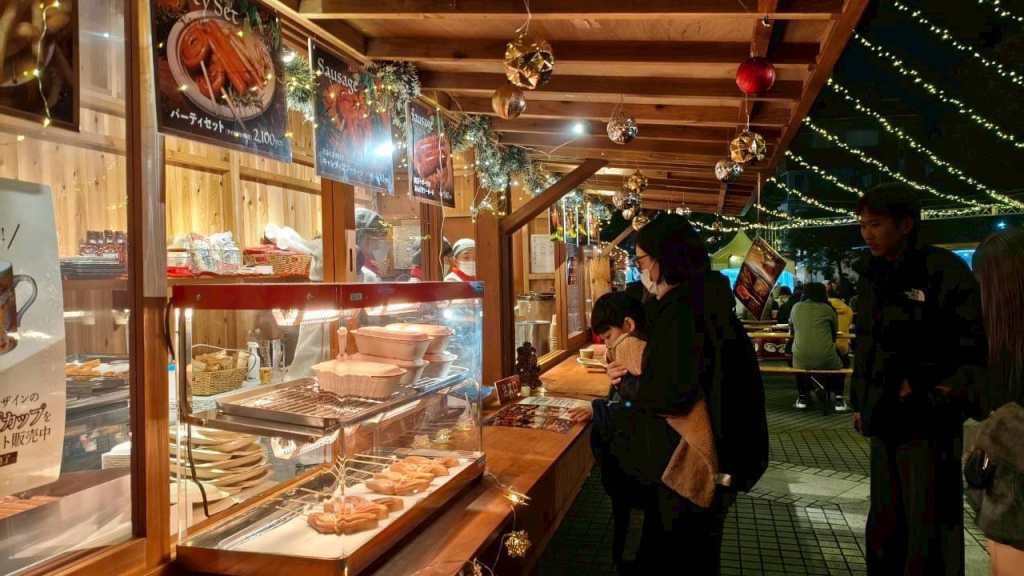
Actually, most of the people visible inside the park hosting the Christmas market are young people and they were waiting in a line at a shop while taking photos. Even if it’s not Christmas Day yet, many shops have lines forming outside.
In a prefecture shaped by relatively low incomes, an aging population, and a shrinking number of young people, everyday choices tend to be made carefully. What stands out instead is the hesitation that often comes before spending.
Around the Christmas market, some locals pause in front of brightly lit stalls before quietly walking past without making a purchase. For many families, buying groceries and paying bills come first.
This cautious attitude is visible throughout the city, where enjoyment often gives way to restraint. There are clear reasons for this hesitation. Average salaries in Kochi are among the lowest in Japan.
“Even working the same hours for my part-time job, I earn less here than I did back home,” said Haruto, a 20-year-old Kochi University student originally from Nagano.
His experience reflects a broader wage gap between Kochi and major urban areas. According to the Ministry of Health, Labour and Welfare’s statistics, the monthly cash earnings that workers regularly receive in Kochi are about ¥184,980, which is around ¥19,000 lower than the national average of ¥203,956.
At the same time, Japan has been making historic moves to raise wages nationally. However, even with these increases, Kochi remains near the bottom of the wage chart, with its minimum wage around ¥1,023 per hour, compared with Tokyo at about ¥1,226 and Osaka at ¥1,177. Average salaries in Kochi Prefecture remain among the lowest in Japan, limiting purchasing power and making discretionary spending difficult.
Kochi is also aging and shrinking. In elementary, after school a free tutoring class was opened which anyone could attend. The sound of scraping on the wooden floor was heard as students pushed and tried to put the tables and chairs together. Not many students took this tutoring, leaving many empty seats unused.
Everyone turned their heads when they heard,
“Wow,” a young boy in shorts with slightly tanned skin shouted. “There’s only old teachers here!” said 10-year-old Akito, astonished with the sight he witnessed.
As of 2025, there were nearly 100,000 people aged 100 or older nationwide. Kochi ranks very high with about 157 centenarians per 100,000 residents, far above figures in urban centers such as Osaka (about 55 per 100,000) and Tokyo (about 57 per 100,000).
While walking through Kochi’s downtown streets or riding its streetcars during the day, elderly passengers are hard to miss. This everyday scene reflects a broader economic cycle rooted in low wages and demographic change.
The prefecture’s population has steadily declined, falling to less than 650,000 and only 3,072 children were born in Kochi in 2025, which means it hit a record low. Nearly 36 percent of residents are now over the age of 65.
By 2040, almost 40 percent of the population is expected to be over 65 years old. Many older residents live on fixed pensions, so they spend less on events. At the same time, many young people leave for bigger cities to find better jobs. Without the younger generation, Kochi prefecture risks losing its sustainability, its culture, and its very ability to function.
It is this sense of urgency that frames how leaders now speak about Kochi’s future. Hamada Seiji, who was recently re-elected as governor of Kochi Prefecture, has described population decline as the prefecture’s most pressing challenge. Warning that if the outflow of young people continues, Kochi will lose the very generation needed to reverse it.
“Our most important task is to make Kochi a place where young people can stay, grow, and build their lives,” he says.
Jobs, education, safety, and daily livability all matter. But beyond policy, there is something harder to measure. Kochi must feel alive. Places where people gather in festivals, markets, shared spaces. It means making sure young residents feel Kochi is not a place they have to leave, but one they want to stay in.
In that sense, the Christmas market is more than a seasonal event. It becomes a brief but powerful reminder of what Kochi can look like when its streets are full of light, movement, and young faces.
Back at the Christmas market, three girls in matching school uniforms are sitting on chairs that have been set up, chatting. One girl who seemed like the most energetic, smiled while scrolling through her smartphone.
“Winter is a fun time to go to the Christmas market with my friends.” Her smartphone screen displayed photos taken with friends against the backdrop of the illuminations, as well as a turkey leg being sold at the Christmas market.
Not only teenagers, but families also come and make this their own kind of tradition. Although Christianity is a minority in Japan and Kochi, many people celebrate Christmas without religious belief and accept it as a seasonal event. On the same night, at another table, a grandmother, sitting with her daughter and two grandchildren, smiling happily as she watched the children eat.
“Recently, we come here together every year,” the grandmother continues. “It makes our Christmas feel more special.” Her daughter couldn’t agree more and nodded many times while stuffing a sausage into her mouth.
Visitor numbers have grown each year, from around 130,000 in 2023 to more than 150,000 in 2024, showing how this market has quietly become a destination for the younger generation.
Inside the small wooden shop, the staff were very busy with the customers. Natsumi, who has been a vendor for two years.
“Customers continue to increase, making things busier and hectic.” she said.
When it’s cold outside, a young girl is relaxing on the sofa while scrolling through her Instagram. Kanade,18, smiling excitedly as she saw the Christmas market situation showing in her feed.
“I’ll go to the Christmas market tomorrow. And I need to decide what to photograph!” she continued,
“I will take many pictures and lots of TikTok videos. The lights are very beautiful.”
In a time when people document their lives online, “Instagramable” places carry more meaning. The market offers illuminated photo spots inspired by European Christmas scenes, creating an atmosphere rarely found in Kochi.
“It feels like a proper Christmas market. The shop building has a European feel. I’ve never been to Europe, but it’s just as I imagined.” Yuina, 18, who had gone to the Christmas market with a friend as a customer, said with satisfaction.
In a place often described as a quiet city, struggling with depopulation and a shrinking youth population. This brief winter moment feels different. Bright, social, and full of motion. It gives young people a reason to gather, to stay out late, to feel excited about their own city.
The market doesn’t fix the economy, and it doesn’t change the statistics. But in a city that fears emptiness, it brings noise, color, and young faces back into the streets. It gives Kochi something precious. It makes Kochi feel alive.
The sound of the front door breaks the silence. Koharu’s older sister steps in, cheeks red from the cold.
“I’m home,” she says, lifting a paper bag with a shy grin.
“I bought a turkey leg for dinner.” And just like that, a little piece of the city’s bright night finds its way into the quiet kitchen.
 Life in Kochi
I love how you describe the Christmas market, being alive and make it seen! Amazing
LikeLike
I’ve been there! It’s really beautiful place to takes a photo and I eat a lot of delicious food 😋
LikeLike
It was such a lovely article. I’ve been to the Christmas Market in Kochi before, and it really is as beautiful and fun as you described. Reading this brought back the atmosphere, the lights, and the excitement.
LikeLike
Such an inspiring article! The article start with how the Christmas Market in Kochi feels like. But it surprising how smooth you mention the problem with kochi income and low population. While reading it, I almost forgot it an article about Christmas. I enjoy the whole story!
LikeLike
Woah, this article makes me nostalgic with the Christmas atmosphere again. I’ve been there! It’s really beautiful place to takes a photo and I eat a lot of delicious food 😋
LikeLike
It was a very interesting article. It reminded me of the first time I went to a Christmas market. such a nice place to visit for winter!!
LikeLike
When people can buy whatever they like at Christmas markets without hesitation, wouldn’t that indicate that Kochi Prefecture is economically stable?
LikeLike
This is so nice article. This event makes our Chistmas more special. I hope it conteniues in the future!
LikeLike
I want to go to Christmas market again even if it is February now!
High prices are looming over us even if such fun events like a Christmas market. I believe your article have good connection fun thing and serious issues. Thank you for your nice article.
LikeLike