
By Shotaro Ogawa
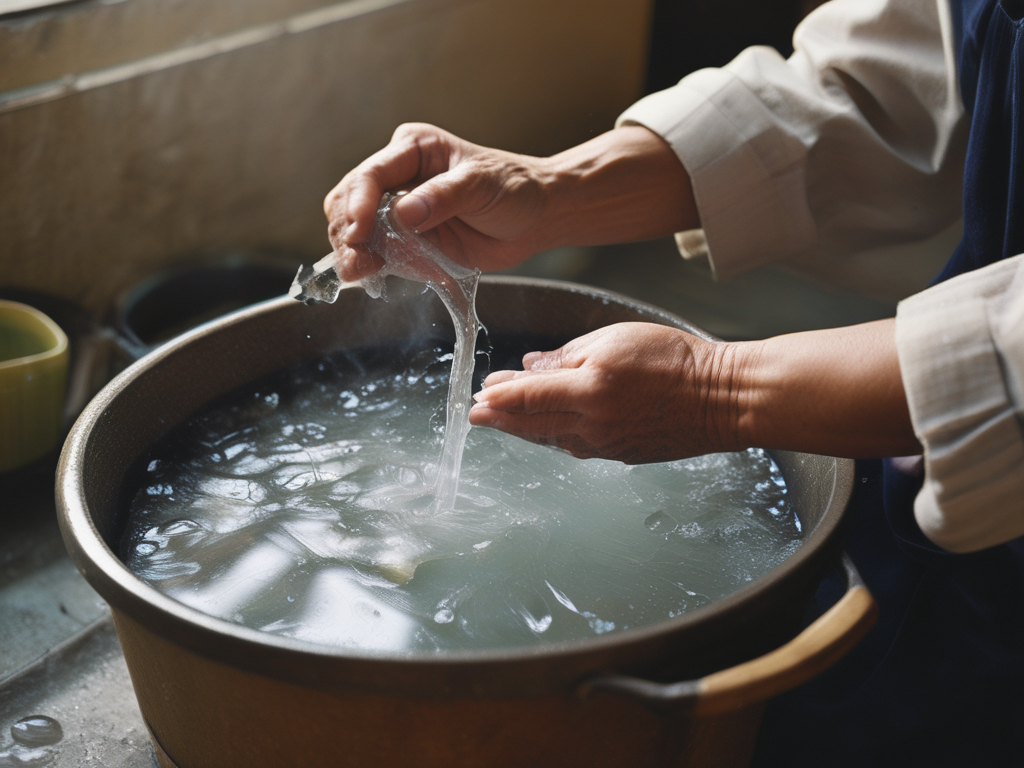
The powerful hands stirring the bucket moved with a steady rhythm, exuding the aura of a skilled craftsman. Water, caustic soda, and waste oil—arguably the star ingredient—were being mixed together.
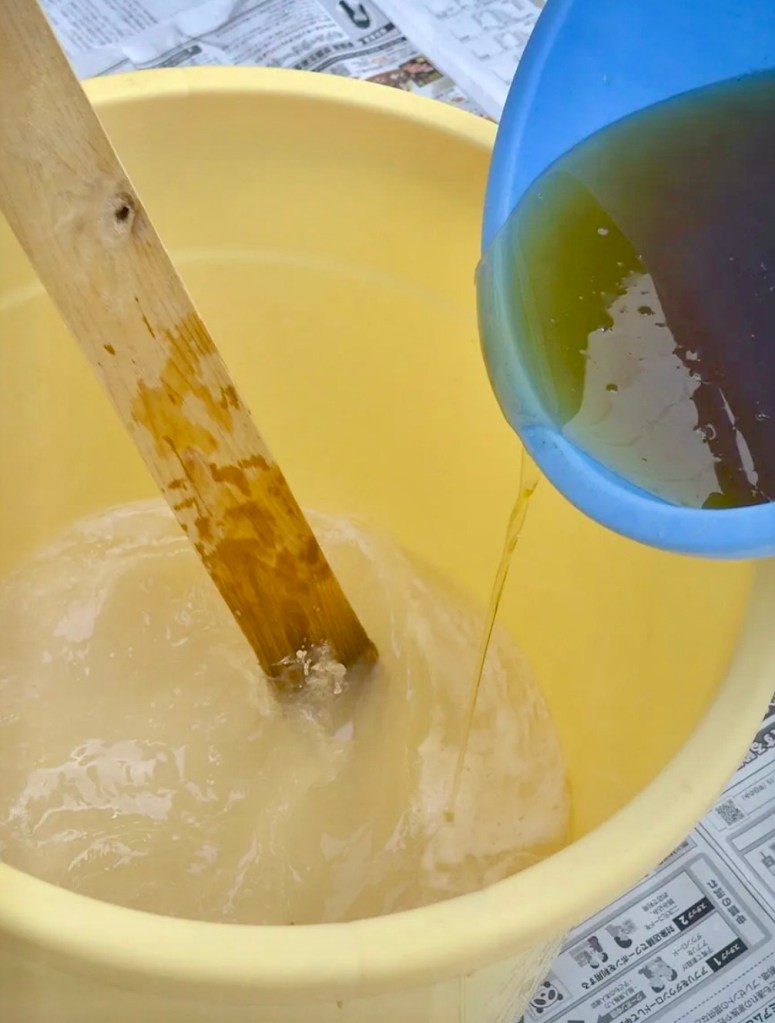
“It’s just a simple task for me, just stirring, but if you keep doing this, it gets better and better,” said 88-year-old Tomiko Takeuchi as she made the soap.
The story begins in a area called Shimanto, located in the southwest of Kochi Prefecture, in a quiet corner known as Taisho Town. This serene town, surrounded by mountains and rich in natural beauty, saw a surge in demand for waste oil soap in 2023. After the Kochi Newspaper reported on it, what was intended to be a year’s supply sold out in just two days.
The waste oil used to make this soap is leftover from tempura and fried foods prepared in local households. The soap, sold at 100 yen per 250g bar, drew customers directly to the Taisho branch of the Town Chamber of Commerce and Industry. At one point, the phone was ringing off the hook—up to five times an hour.
“I’ve been looking for a place in Kochi for a long time,” and “I support this kind of initiative. I want to buy it even if the shipping cost is high,” were common sentiments among buyers of the waste oil soap. In total, over 350 bars of soap that had been produced were sold out, exceeding expectations.
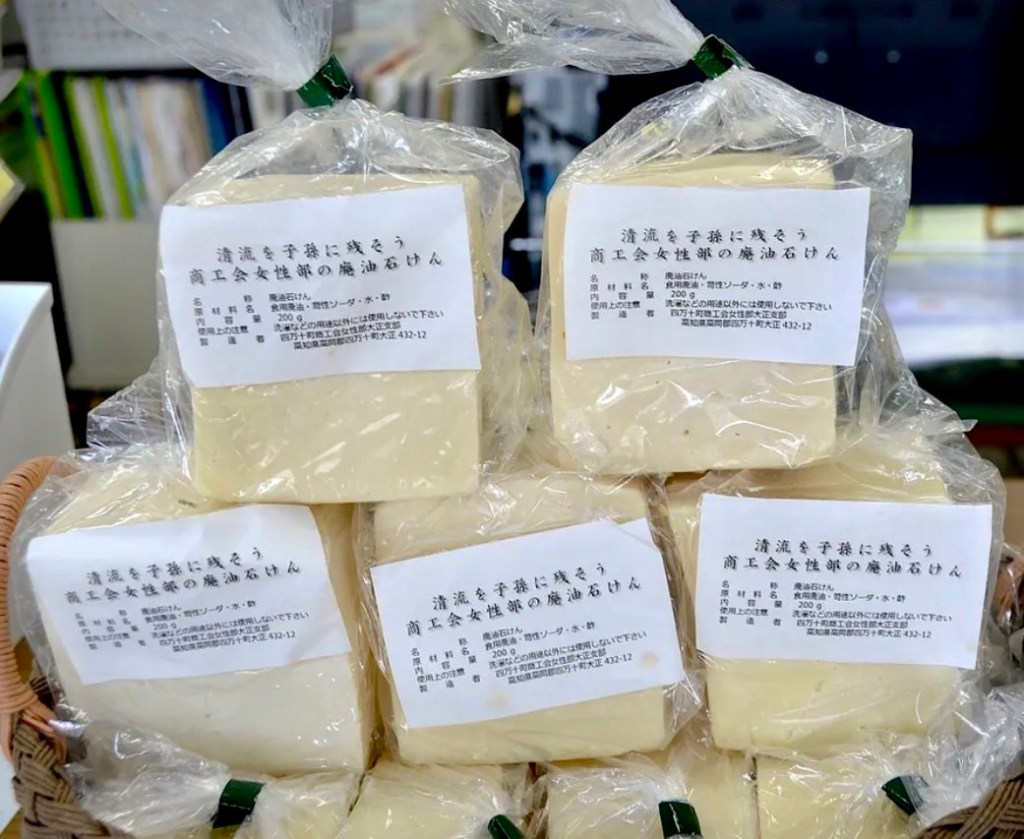
Ms. Tomiko Takeuchi has been a dedicated member of the Taisho Branch of the Women’s Department of the Town Chamber of Commerce and Industry since she started making waste oil soap.
In 1990, a freshwater red tide in Lake Biwa, Shiga Prefecture, caused by domestic wastewater, became a significant issue, sparking a national “soap movement” that eschewed synthetic detergents. With the completion of the symbolic stone windmill at Todoroki Park in the former Taisho Town, awareness of preserving the Shimanto River grew. Members of the Chamber visited the Women’s Department of the Agricultural Cooperative, which was already making waste oil soap, as well as a resident group in Kochi City.
Households in the Taisho area began handcrafting soap from unused tempura oil, selling it for 100 yen per 200-gram bar.
The waste oil soap produced by the Taisho Branch of the Town Chamber of Commerce and Industry is closely aligned with the Sustainable Development Goals (SDGs), a prominent topic in today’s society. In particular, the soap relates to Goals 7 and 9 of the SDGs. Goal 7, “Affordable and Clean Energy,” emphasizes the collection and reuse of waste oil that would otherwise be discarded, minimizing waste and creating new products sustainably. Goal 9 focuses on fostering innovation and building infrastructure.
Despite the elderly demographic of the Taisho Branch, they have successfully created a “new industry” and continue to innovate. If technological advancements accompany these efforts, it will bring them closer to achieving the SDGs.
“Although our activities have a limited regional impact, I would be happy if this could be passed down to the next generation,” said Tomiko Takeuchi.
 Life in Kochi
I never no ideas which unused oil can become soap. I understood that we can do anything and have lots of ways to sustain important things like Shimanto River. I want to try to use Taisho area’s handcrafting soap from unused oil!
LikeLike
Do they have an online shop?
LikeLike