
By Mako Mimoto
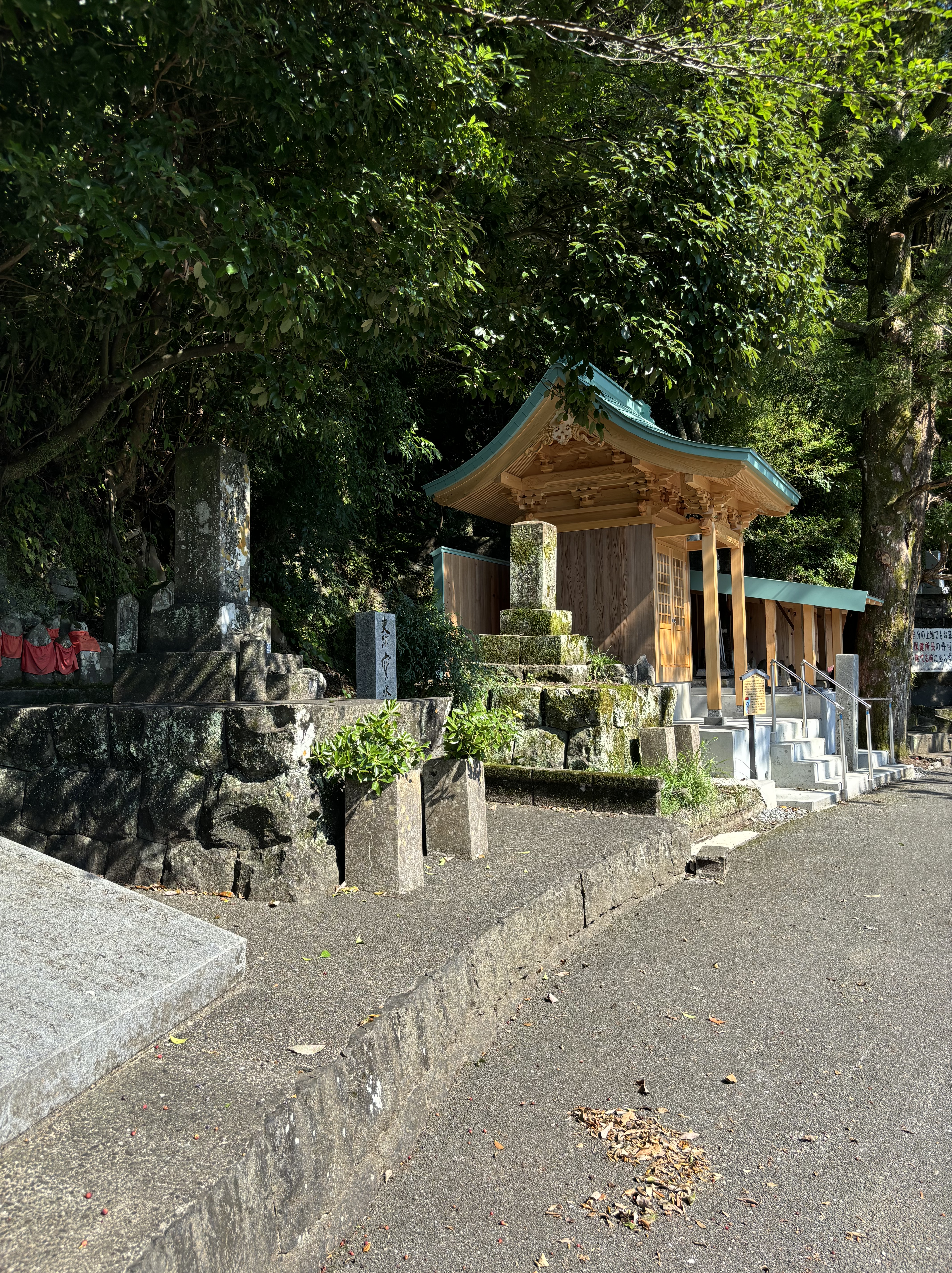
Nestled in the forest, Ouma Shrine is a natural wooden shrine resembling a small house. It stands along a back road, featuring a new green copper roof and freshly cut wood with beautiful grains. Though new, the shrine radiates a sense of nostalgia. Beside it are around 10 statues of the Jizo Bodhisattva, a compassionate figure in Japanese Buddhism, each about 50 cm tall. Behind the shrine, a rough path leads into the mountain trail. Despite its solitude and silence, the shrine exudes strength, largely unnoticed by passing cars.
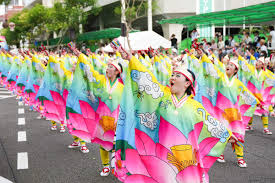
Located in Ikenouchi, Susaki City, under a fork-shaped cedar, Ouma Shrine enshrines Ouma, connected to the famous Yosakoi summer dance festival in Kochi. Held annually from August 10th to 11th since 1954, Yosakoi aims to revitalize shopping districts. Approximately 10,000 people dance at several venues, following rules like using naruko and incorporating the Yosakoi section. The festival’s famous line, “I saw a monk buying a hairpin at Harimaya Bridge in Kochi, Tosa,” refers to Ouma, the shrine’s enshrined figure.
A long time ago, in 1854, Keizen, a monk at Mount Godai Chikurinji Temple, fell in love with 17-year-old Ouma, a metalworker’s daughter who helped her mother with laundry at the temple. Ouma, however, became more attracted to the older head priest, Junshin. To win her favor, Keizen bought her a hairpin from a haberdashery near Harimaya Bridge. This act was scandalous as monks were forbidden to marry, and the rumor spread quickly. Junshin, learning of this, banished Keizen from the temple. Junshin and Ouma continued their relationship until Keizen falsely accused Junshin of buying the hairpin, leading to Junshin’s house arrest and Ouma’s banishment.
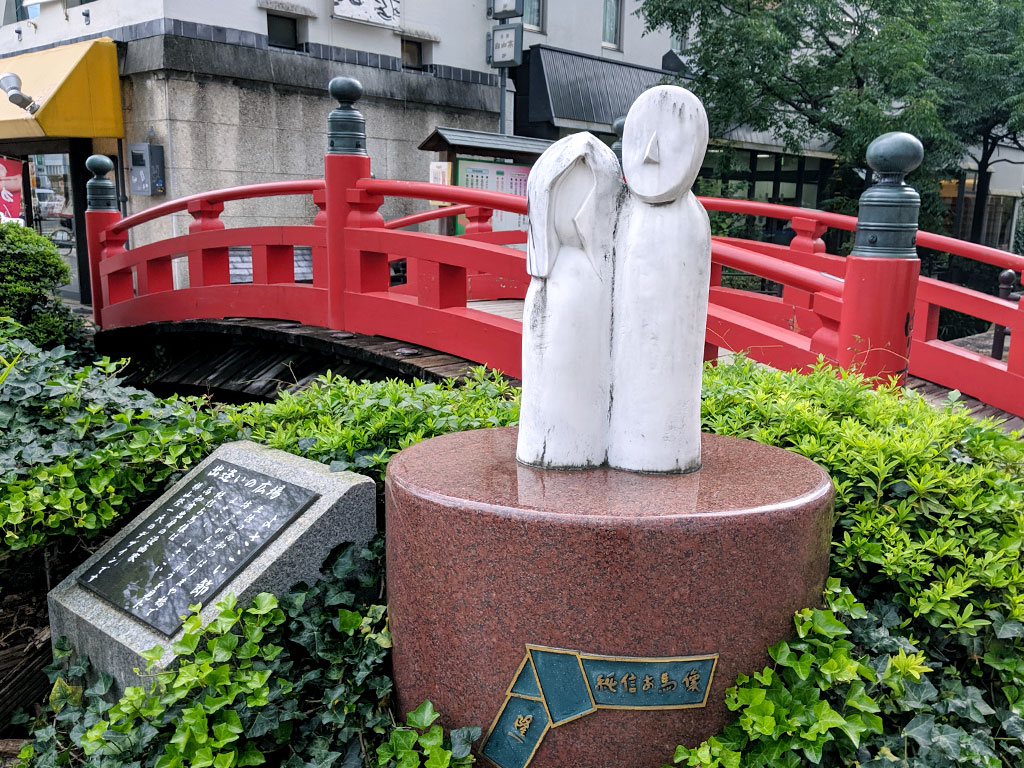
Despite the separation, Junshin attempted to elope with Ouma, only to be caught and exiled again. Ouma was placed under the custody of the village headman of Susaki City. Despite their ordeals, both eventually married other people and lived happily. Today, Harimaya Bridge features a white bronze statue of Junshin and Ouma.
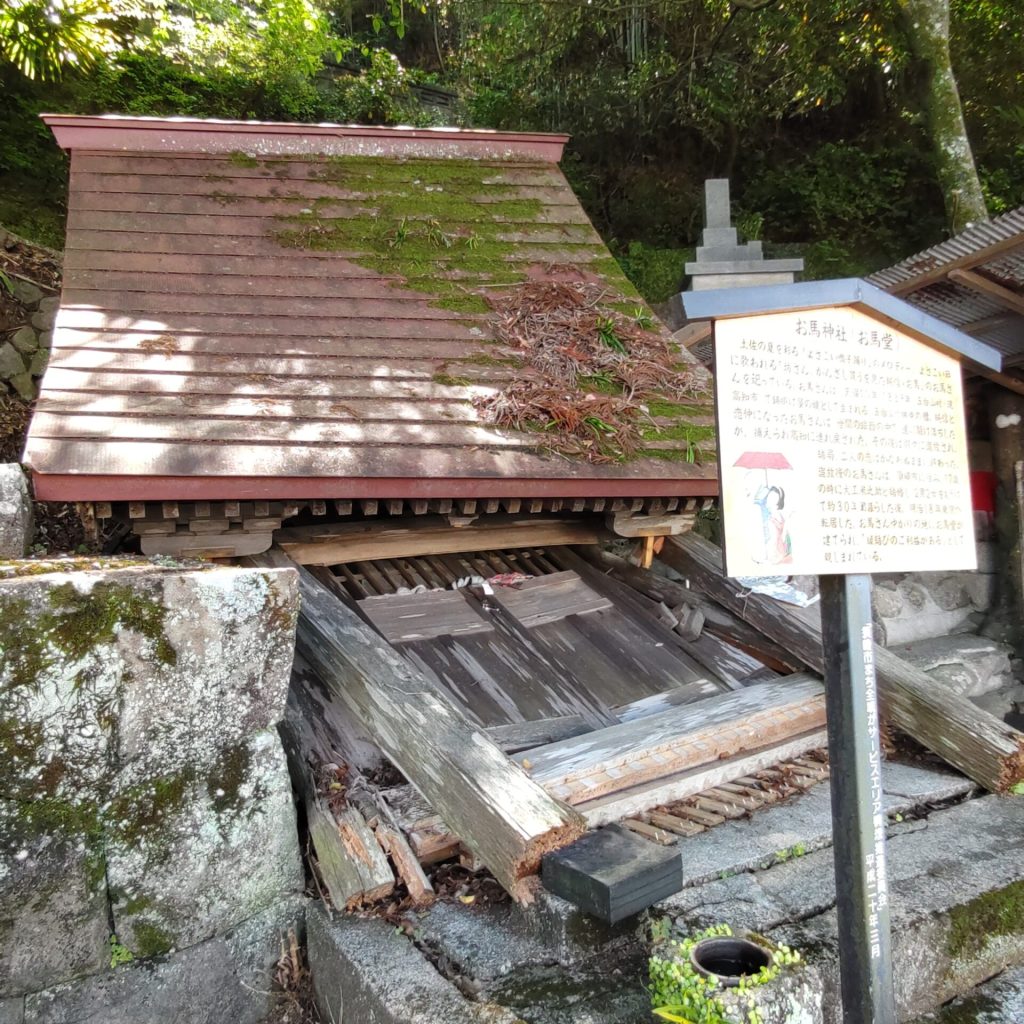
Although this shrine has a romantic story, years of exposure to the elements caused the venerable Ouma Shrine to collapse, evoking sympathy from residents and tourists. They consulted the city hall for repair possibilities, stressing the cultural significance of the shrine linked to the Yosakoi festival. There are many shrines in Susaki City that need to be restored. It was considered to remove them completely because of the cost, time, and manpower required. However, it was decided to restore them because it was thought that the shrines associated with the now famous and popular Yosakoi should be preserved. The budget set for the restoration was 6.5 million yen and it was organized by Oumajingawokaishuhozonsurukai (“Ouma Shrine Restoration Organization”). It was difficult to raise the funds. Ouma Shrine was not well known in not only nationwide and also in Susaki City, and there was no effective way to promote it, so it was a struggle.
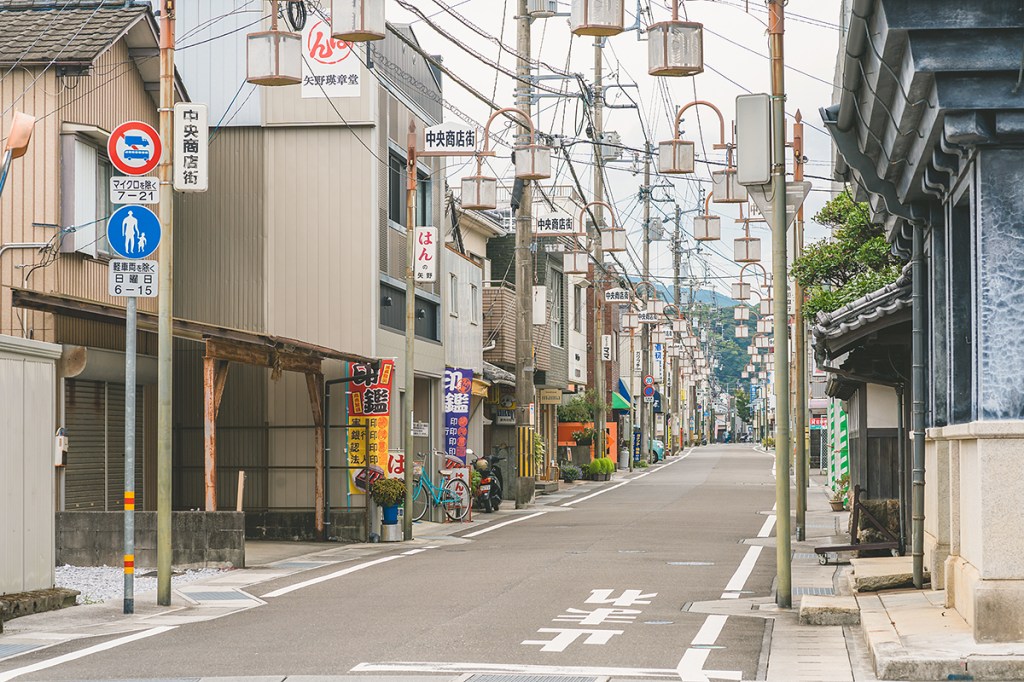
Despite financial struggles, the restoration of Ouma Shrine was completed in June 2024, featuring a brand-new roof and beautifully polished wood, reclaiming its former glory.
Susaki City, located in central Kochi Prefecture, faces the Pacific Ocean and is backed by the Shikoku Mountains. It boasts a complex ria coastline and the natural port of Susaki Bay. Despite its rich natural environment, including the Bandaga forest and Shinjo River, the city faces severe depopulation. From 1960 to 2015, the population declined by a third, posing challenges in preserving local culture. The 2024 Susaki City Depopulated Area Sustainable Development Plan aims to address these issues by attracting tourists to revitalize local commerce and cultures. Nevertheless, population decline, cultural preservation, and its balance remain major and persistent issues now.
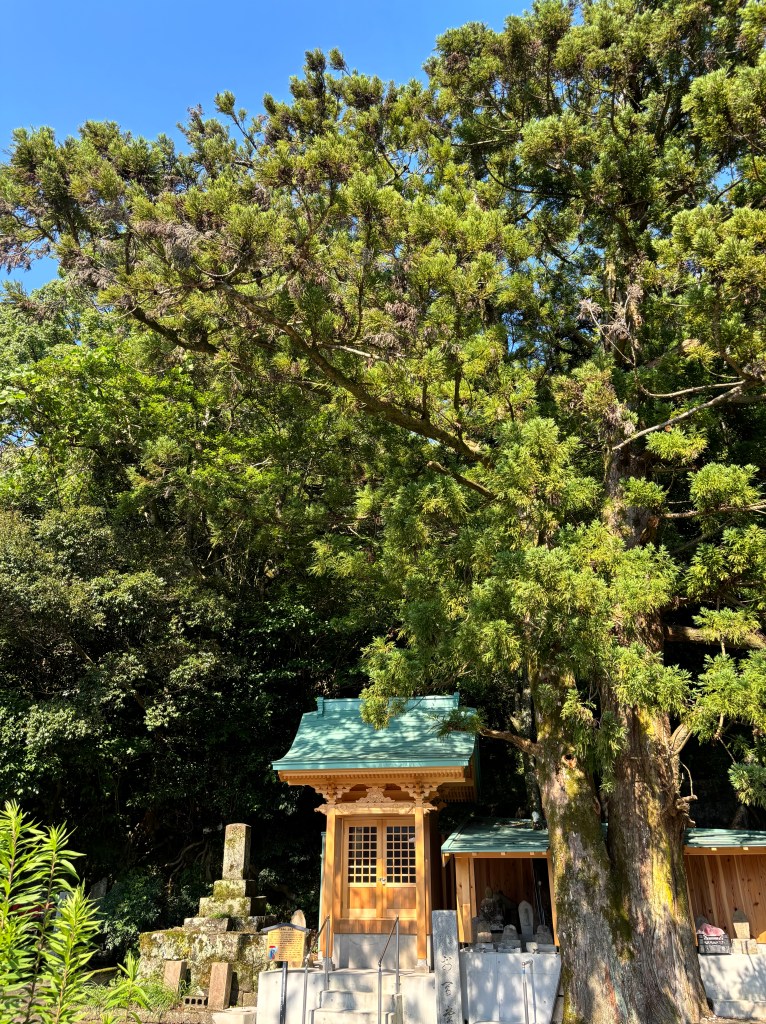
“I want young people to spread this important culture. Old ladies like me don’t know how,” Michiyo Fujiwara, Secretary-General of the Susaki Chamber of Commerce and Industry, emphasizes the importance of passing on cultural heritage to the younger generation. She envisions promoting local shrines and tourist sites through recommended routes and collaborations with local businesses, like the confectionery shop Hamako. Fujiwara’s enthusiasm highlights the collective effort needed to preserve and celebrate Susaki City’s cultural treasures.


Ouma and Junshin’s story is interesting. I think it is important to preserve Japanese culture, but in reality it is not easy. I hope that many people will know about Ouma Shrine and it will be preserved.
LikeLike
It’s a good aritlce about a small, but important cultural property. Thank you.
LikeLike
Ouma and Junshin’s story is really good and I was surprised that their both married with other people! I didn’t know that there is the Ouma shrine in Susaki city. I love mysterious places, so I’d like to visit there someday.
LikeLike