
By Usumoto Rio
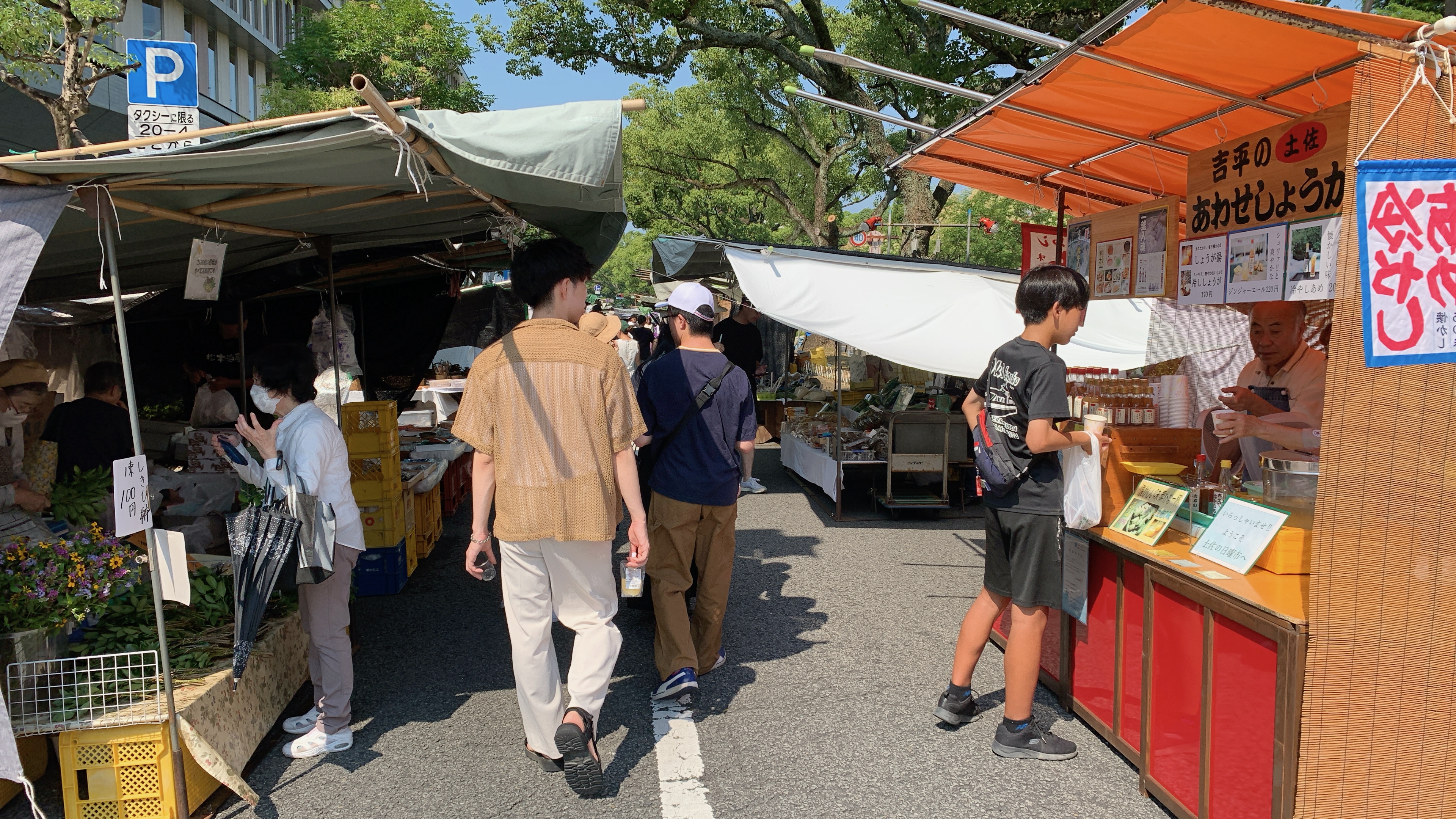
On this typical Sunday, the bustling street market in Kochi has come alive, drawing both tourists and locals. The air is filled with the lively chatter of shop owners and customers, many of whom converse in the regional Tosa-ben dialect. This distinct language adds a layer of authenticity and local flavor to the market experience.
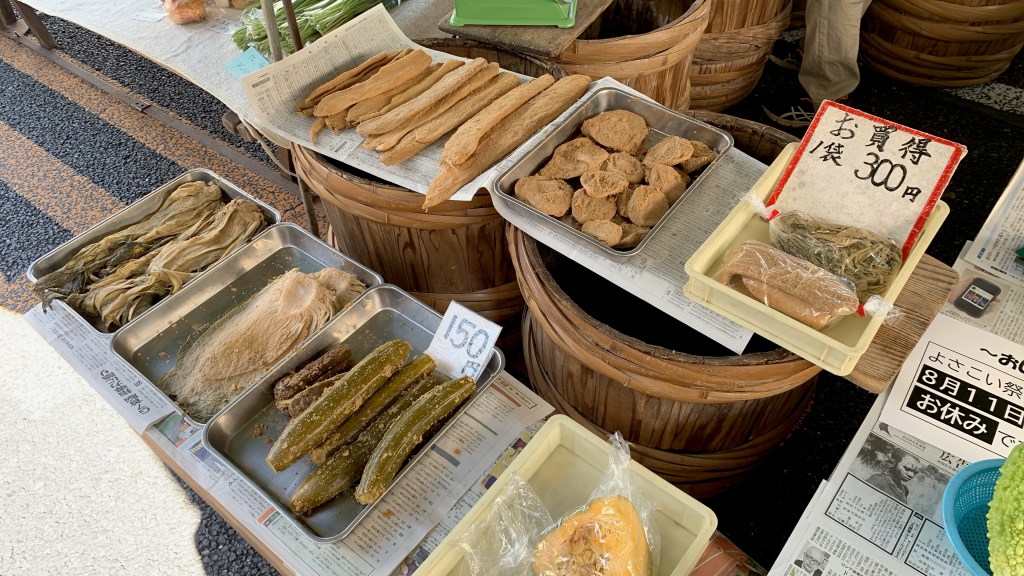
Among the most popular stalls is one that specializes in traditional Japanese foods, particularly Tsukemono—Japanese pickles renowned for their strong, unmistakable aroma. You can often find this stall by following the scent alone. Mr. Nomura, the affable shop owner, is a fixture here, always ready with a warm smile and a friendly conversation that adds to the market’s inviting atmosphere.
“Itsumo arigatou,” Mr. Nomura says with a heartfelt thank you as he hands a customer their purchase.
“Mata kuruki,” replies an elderly patron, promising to return, their words wrapped in the thick Tosa-ben dialect. It’s clear from their lengthy exchange that this is more than just a simple transaction; it’s a reflection of a relationship built over years.
Yet, the market—and the culture behind it—is under threat. In 2018, Japan revised its food hygiene standards, which came into full effect in July 2024. These stricter regulations, while intended to prevent foodborne illnesses, have significantly affected the traditional Japanese food industry.
The Sunday market is a vital part of Kochi’s cultural fabric, with its roots dating back to around 1690. For over 300 years, it has been a gathering place for the community. Today, nearly 300 stalls stretch over a kilometer, drawing some 17,000 visitors every week, making it Japan’s largest street market. It offers everything from fresh produce and flowers to handmade knives and, of course, Tsukemono, a product cherished by both locals and tourists alike.
Tsukemono are not just any pickled vegetables; they are a cornerstone of Japanese cuisine, historically providing essential vitamins during the long winter months. The pickling process doesn’t just preserve; it enhances, making these vegetables a year-round staple.
Japan boasts over 600 varieties of Tsukemono, with regional differences adding to their unique appeal. In the north, they are primarily used for preservation, while in the south, they are enjoyed as a dish in their own right. In recent years, farmers have started selling Tsukemono at roadside stations, further increasing their popularity.
However, the 2018 hygiene revisions were prompted by a tragic incident in 2012, when a lightly pickled variety known as Asazuke caused a severe outbreak of food poisoning in Hokkaido. The incident, which affected over 100 people and resulted in several fatalities, led the government to enforce stricter regulations across the country, including on all Tsukemono producers.
Complying with these new standards has been costly. Producers now need to invest in expensive equipment upgrades, such as waterproof walls, specialized faucets, sinks, and refrigerators tailored for food production. For many Tsukemono makers—often farmers who consider pickling a secondary occupation—these changes are not feasible. In Kochi alone, over 100 producers have ceased operations, threatening to erase a vital piece of cultural heritage despite some government support.
Mr. Nomura, who has been selling Tsukemono at the Sunday market since his youth, following in his grandfather’s footsteps, is one of the many affected. To him, Tsukemono is not just a food product but a crucial part of Japanese culinary tradition. Despite the financial burden of complying with the new regulations, he remains determined to continue.
“Tsukemono is a cornerstone of Japanese food culture. If everyone stops making it, reviving it would be challenging,” he reflects.
Despite the difficulties, Mr. Nomura remains hopeful about the future.
“We must preserve our culinary heritage,” he says with quiet resolve, as the market around him buzzes with life, a testament to the enduring appeal of tradition in a rapidly changing world.
 Life in Kochi
i think it’s a great articls!
We can know a lots of “Tosa-Ben” culture and peoples deeply reletionship in there. I could learn about Nichiyouichi a lot, too.
And also, we could notice that Japanese “Tsukemono” are faced to very sore problem in these days.
My Grandparents are also working as a farmer, but they saids Tsukemono is too hard to make for the eldery person.
I felt that we must protect the “Tsukemono culture” as a important Japanese culture.
p.s. I want to go to the Nichiyouichi if I have a time!!
LikeLike
I noticed that Kochi has not only natural heritage but also culinary culture like tsukamoto. When I go to do part time job going through Sunday Market, I also feel here is filled with the lively chatter of shop owners and customers. It’s just like Kochi. I am worried about existential crisis, but somehow Sunday Market will continue.
It is so cute to add tosaben conversation!
LikeLike
It’s a difficult problem. Food safety is very important, but sometimes maybe the government goes too far. It would be a shame if these sorts of producers were pushed out needlessly.
LikeLike